
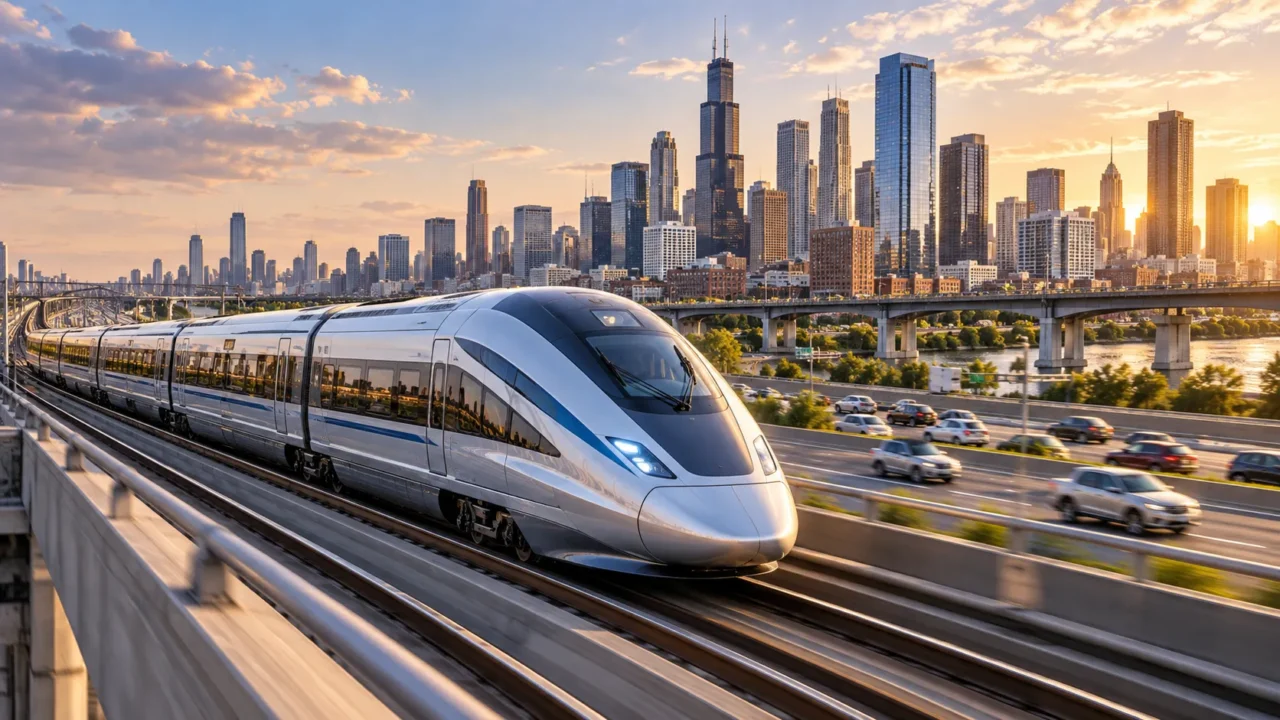

Brightline’s progress has revived a familiar question: why does the US still lack the extensive high-speed rail networks seen in Europe and Asia?
The central development
Brightline’s progress has revived a familiar question: why does the US still lack the extensive high-speed rail networks seen in Europe and Asia? The central development is confirmed by the supplied report, while forecasts, medical outcomes, legal conclusions and other unresolved details are identified separately.
Key points from the report
| Key point | Confirmed position |
| Detail 1 | US passenger rail projects face high construction costs, fragmented approvals and long land-acquisition processes. |
| Detail 2 | Brightline offers a privately led model, but its services do not remove the national infrastructure challenge. |
| Detail 3 | Successful corridors depend on population density, station access, reliable frequency and political continuity. |
How events reached this point
Brightline demonstrates that travellers may choose rail when stations, frequency and journey time are competitive. It does not solve the broader challenge of building new corridors across different jurisdictions. The distinction between one successful route and a repeatable national model is central to the debate.
The problem is not simply that Americans prefer cars or planes. Large projects move through federal, state and local rules, while funding often changes with political cycles. Building tracks through dense cities is expensive, and sharing freight corridors can restrict speed and scheduling.
The broader picture
Large rail projects are shaped by more than train speed. Land acquisition, station access, environmental review, construction costs, operating frequency and connections to local transport determine whether a service becomes useful. A fast train that is difficult to reach or runs infrequently may save less time than its headline speed suggests. Projects also need stable funding across several political and economic cycles.
Comparisons with Europe or Asia require care because population density, existing rail corridors and planning systems differ. The strongest US opportunities are usually corridors where cities are far enough apart to make driving tiring but close enough that airport procedures weaken the advantage of flying. The real test is whether projects can deliver reliable service at a cost that can be repeated elsewhere.
The passenger experience will determine whether infrastructure investment produces lasting demand. Journey time must be considered door to door, including travel to the station, waiting, transfers and reliability. Pricing also matters because travellers compare rail with fuel, parking and airfare, not with one headline fare. A project that performs well on those everyday measures has a better chance of encouraging further routes than one that depends mainly on novelty.
The supplied reference is particularly useful because it directly supports the report’s central event and identifies the limits of what was known when it was published. Its account establishes that uS passenger rail projects face high construction costs, fragmented approvals and long land-acquisition processes. It also records that brightline offers a privately led model, but its services do not remove the national infrastructure challenge. The remaining point, that successful corridors depend on population density, station access, reliable frequency and political continuity., helps prevent a stronger conclusion than the evidence allows. Reading the source in that way keeps the article focused on documented information instead of commentary that may have appeared later on social media.
For useful related context, Factelle has also covered the UK debate over tariffs on Chinese electric vehicles.
Who is affected
Brightline matters because it tests whether modern intercity rail can attract travellers in car-oriented regions. The strongest routes connect major population centres far enough apart to make driving inconvenient but close enough that flying adds unnecessary airport time.
What has not been settled
The available reporting establishes three points. US passenger rail projects face high construction costs, fragmented approvals and long land-acquisition processes. Brightline offers a privately led model, but its services do not remove the national infrastructure challenge. Successful corridors depend on population density, station access, reliable frequency and political continuity. Those details provide a reliable base for the article, but they should not be extended into claims the source has not established. Where an outcome depends on a medical test, court process, official policy, later fixture or production decision, the present position remains provisional. That distinction protects readers from confusing a reported development with a final result.
What comes after this
A national rail transformation would require repeatable delivery, not one showcase line. Cost control, land use around stations and dependable service will determine whether current projects become a network or remain isolated examples.
The next useful update should add new evidence rather than repeat the original headline. Readers should look for a named official statement, completed result, formal filing, medical designation, published schedule or other first-hand confirmation that directly addresses the unresolved point. Until that appears, the known facts above provide the safest account of the story and its immediate significance.
A fuller reading of this transport story also requires attention to timing. The reference captures the position at publication, while later statements or results may change the practical meaning without making the earlier report inaccurate. For now, the most useful evidence remains the documented sequence: US passenger rail projects face high construction costs, fragmented approvals and long land-acquisition processes. Brightline offers a privately led model, but its services do not remove the national infrastructure challenge. Any follow-up should be checked against the same standard, with dates, named sources and a clear distinction between a confirmed update and an interpretation. That gives readers enough context to understand the development without presenting uncertainty as fact.
Recommended
Summarize this article
Open this story in your preferred AI assistant. The prompt is copied as a fallback.

About the author
FTL Editor
"FTL Editor" is Factelle's house byline for stories reported and verified by our editorial desk rather than a single named contributor. Every fact is checked against a primary or wire source, campaign/company claims are labeled as such rather than presented as verified, and articles are updated with a visible timestamp as new information comes in. Corrections are flagged directly in the article per our Corrections Policy.