


Buffalo opened its new Highmark Stadium with six touchdown drives, while Detroit allowed 41 points and 446 yards in a loss that exposed the same defensive problems for a second straight week.
The Buffalo Bills defeated the Detroit Lions 41-31 in the first regular-season game at the new Highmark Stadium. Buffalo led 21-0, scored touchdowns on six drives and controlled the game with 446 total yards. Josh Allen accounted for five touchdowns, while Detroit surrendered at least 30 points for the second consecutive week.
Buffalo controlled the night from the opening drive
Joe Brady made an aggressive choice before the first snap. After Buffalo won the coin toss, the Bills head coach took the ball instead of deferring to the second half. NBC Sports reported that Brady wanted his team to use the new-stadium atmosphere and set the tone immediately.
The plan worked. James Cook ran three times for 23 yards on the opening possession. Josh Allen completed two passes for 22 yards and added four carries for 40, finishing the drive with a one-yard touchdown. Buffalo did not face a third down during the march.
That start became the pattern for the evening. The Bills led 14-0 after the first quarter and 21-0 early in the second. Detroit never tied the score and never took the lead. The Lions later produced enough offense to make the final margin 10 points, but Buffalo remained in control.
Bills vs Lions score and key numbers
| Category | Detroit Lions | Buffalo Bills |
|---|---|---|
| Final score | 31 | 41 |
| Total yards | 355 | 446 |
| First downs | 24 | 34 |
| Rushing yards | 66 | 203 |
| Third downs | 4 of 11 | 9 of 12 |
| Red-zone scoring | 3 of 4 | 5 of 5 |
| Turnovers | 0 | 0 |
| Possession | 26:15 | 33:45 |
ESPN’s report on the stadium opener described the result as more dominant than the final score suggested. The numbers support that reading. Buffalo gained 91 more yards, produced 10 more first downs and ran for 137 more yards than Detroit.
Josh Allen gave Detroit no safe answer
Allen finished with 248 passing yards and three touchdown passes. He also ran 14 times for 69 yards and two scores, giving him five total touchdowns in the first NFL game at the new stadium. The Lions could not consistently contain him inside the pocket or keep him from extending plays on the ground.
His 43-yard touchdown pass to a wide-open Joshua Palmer made it 14-0. Later, Allen found Dalton Kincaid and Dawson Knox for scores. Buffalo reached the end zone on all five of its red-zone trips, which removed the margin for error Detroit needed to mount a real comeback.
Cook added another layer to the problem with 135 rushing yards and a touchdown on 21 carries. Buffalo’s 203 total rushing yards meant Detroit could not focus solely on Allen’s arm or his scrambling ability.
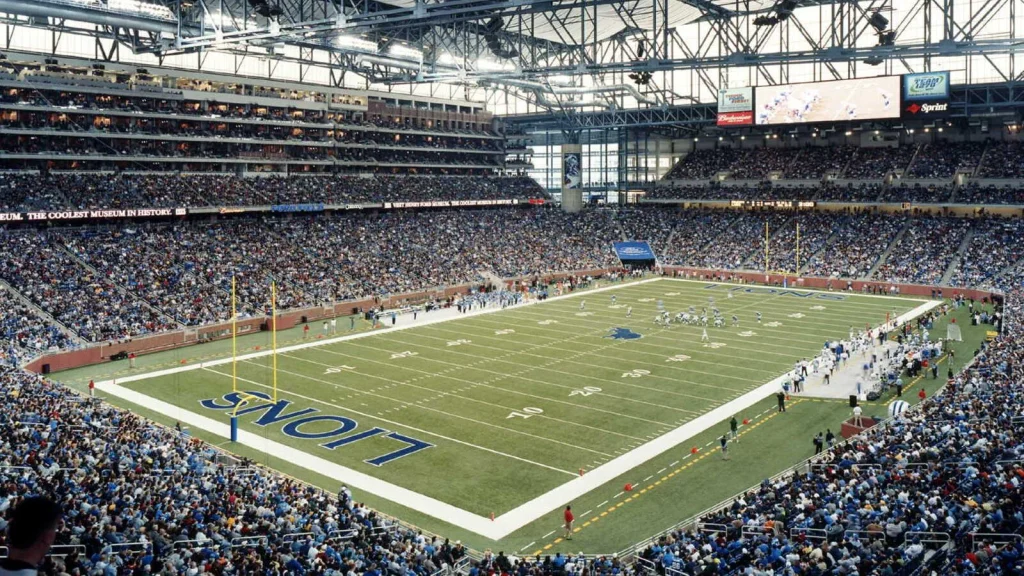
Detroit’s offense did enough to expose the real problem
Jared Goff completed 26 of 38 passes for 327 yards, four touchdowns and no interceptions. Amon-Ra St. Brown caught nine passes for 142 yards and two scores, while Jahmyr Gibbs and Sam LaPorta also caught touchdown passes. Those figures would normally give Detroit a strong chance to win.
Instead, the Lions spent the night chasing a three-score deficit. Goff was also sacked four times, and Detroit managed only 66 rushing yards. Even so, the offense cut the margin to 10 several times and scored twice in the fourth quarter. The defense never delivered the stop needed to turn that pressure into a realistic comeback.
The Detroit News column framed the performance as another indefensible showing from the Lions’ defense. That concern carries extra weight because Detroit also allowed 30 points in its season opener, when New Orleans erased a 21-0 deficit before the Lions survived in overtime.
Four defensive failures that decided the game
- Detroit allowed Buffalo to score touchdowns on its first three possessions and fall behind 21-0.
- The Lions gave up 203 rushing yards, including 135 to Cook and 69 to Allen.
- Buffalo converted nine of 12 third downs, keeping drives alive and Detroit’s defense on the field.
- The Bills finished every red-zone opportunity with a touchdown and committed no turnover.
Aidan Hutchinson and Derrick Barnes recorded Detroit’s two sacks, but isolated pressure was not enough. Buffalo’s balance forced the Lions to defend every part of the field, and the secondary repeatedly left receivers with space.
Why the opening possession mattered
Brady’s decision to receive was more than a ceremonial choice for the stadium opener. It gave Buffalo the first opportunity to channel the crowd’s energy into a scoreboard advantage. The offense responded with a 65-yard touchdown drive built around Cook and Allen, then followed it with two more touchdown possessions.
The Bills eventually produced six touchdown drives in the 41-31 victory. Brady became the first coach in franchise history to win his first two games, and Buffalo moved to 2-0. The stadium debut also drew more than 60,000 fans, according to ESPN, giving the opening drive the atmosphere Brady wanted.
What the result means for both teams
Buffalo leaves Week 2 with a 2-0 record, a signature performance from Allen and a successful opening night at its new home. The offense showed it can win through quarterback movement, a traditional running game and red-zone efficiency without relying on takeaways.
Detroit falls to 1-1 with a more urgent issue. Its offense has scored 62 points across two games, yet the defense has allowed 71. One poor matchup against Allen can be explained. Back-to-back games with at least 30 points allowed, repeated coverage breakdowns and weak third-down results point to a broader problem.
The Lions do not need to abandon their season outlook after two weeks, but they do need faster answers. Better communication in coverage, stronger run fits and more reliable tackling are immediate priorities. If those areas remain unchanged, even productive games from Goff and Detroit’s playmakers may continue to be wasted.
Recommended
Summarize this article
Open this story in your preferred AI assistant. The prompt is copied as a fallback.

About the author
FTL Editor
"FTL Editor" is Factelle's house byline for stories reported and verified by our editorial desk rather than a single named contributor. Every fact is checked against a primary or wire source, campaign/company claims are labeled as such rather than presented as verified, and articles are updated with a visible timestamp as new information comes in. Corrections are flagged directly in the article per our Corrections Policy.